

Our Penicillin Moment
The potential of medical AI is now clear. Our moral obligation is to choose action over delay.

The Fever Has Broken
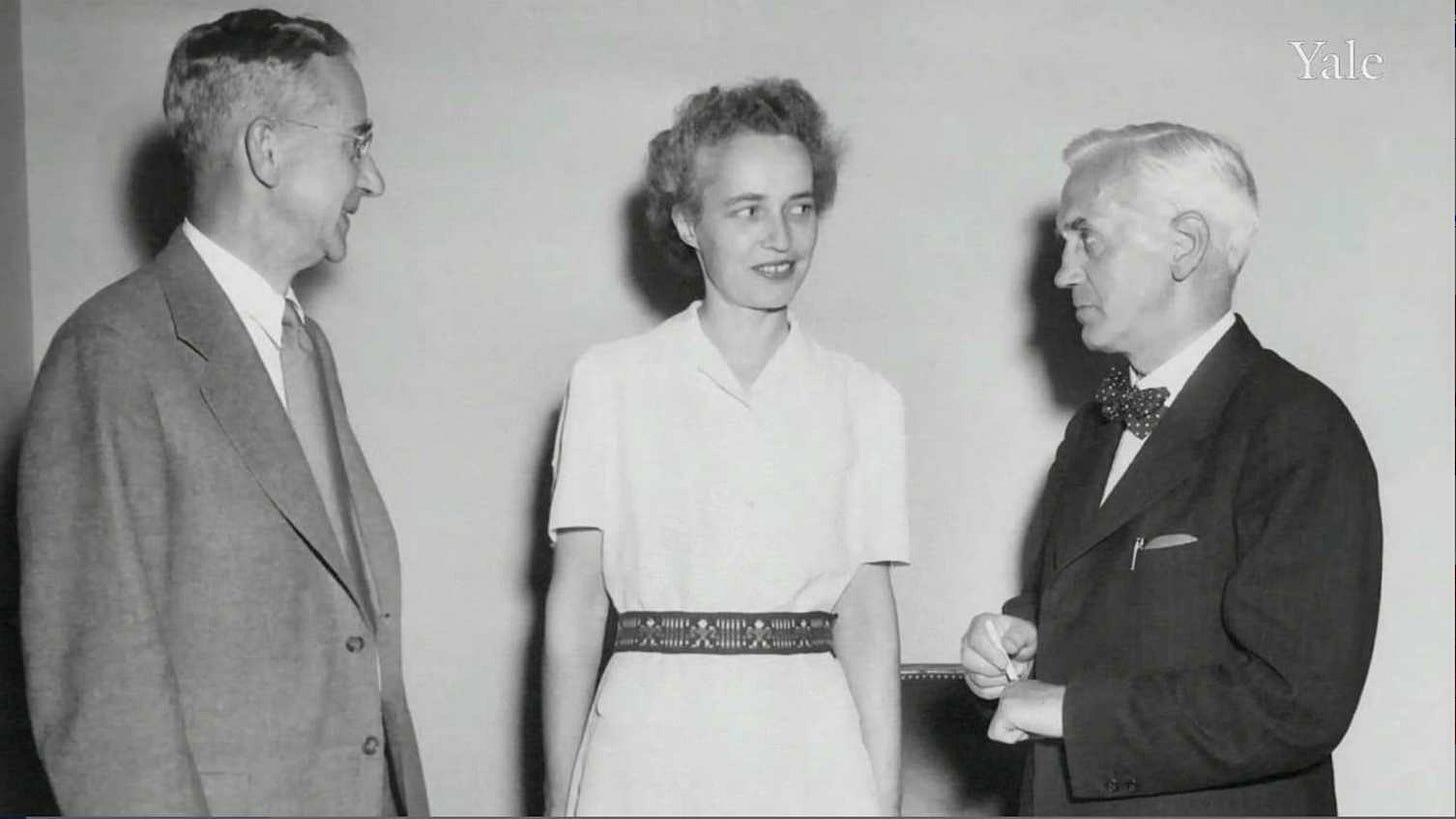
In March of 1942, Anne Miller was dying. An infection raged through her bloodstream, and despite the best efforts of her doctors at Yale for nearly a month, she continued to worsen. For Dr. John Bumstead, Anne’s attending physician, there was only one last hope available.
Through a seemingly impossible set of circumstances, he had managed to acquire a few grams of an experimental substance - penicillin. The minuscule amount he was given represented almost half of the entire supply in the United States at the time - it was so rare that it was delivered to the hospital under police escort. When it arrived, the dose was prepared and administered to Anne while the chaplain said grace.
In the morning, as Dr. Bumstead entered Anne’s hospital room, the prayers of the scientists and the clergymen had both been answered. The effect was immediate and dramatic - her fevers, which had reached as high as 107 degrees, quickly subsided. Soon, she was able to take meals and converse. Eventually, a few weeks later, she would leave the hospital.
Anne’s miraculous recovery moved penicillin out of ‘experimental’ and firmly into ‘transformational’ territory, compelling action to bring the first antibiotic to scale through accelerated industrial production. Dr. Bumstead would continue to practice as an internist, and Yale University would come to play a major role in the expansion of penicillin. Anne went on to live another 50 years.
In the history of medicine, the age before antibiotics seems like a story from a darker era, on the same timeline with leeches and battlefield amputations. But Anne Miller is a contemporary - she only passed away in 1999, at the age of 90. We are not so far removed from a world without the modern cures we take for granted.
A Decade of Delay
Anne’s story is uplifting, but the story of penicillin also contains a cautionary tale. The truth is that penicillin had become known to the world over a decade earlier. Alexander Fleming published his original breakthrough discovery in 1929 - but lack of interest and perceived urgency had caused his findings to sit largely unexamined. It was not until a decade later, in 1939, that researchers at Oxford developed a vision for penicillin as a cure for bacterial infections and aggressively pursued its purification for medical use. The decade of delay between discovery and commitment was a time when millions of people died from infections that could have theoretically been prevented. In a different world, Anne Miller might have been one of them.
With medical AI, we now find ourselves in an analogous situation confronting the implications of a new discovery. But we are not Fleming staring inquisitively into the petri dish. We are Dr. Bumstead, staring in disbelief at what now seems possible.
For all of medical history, clinical judgment has required a human mind. That constraint has now been lifted. Medical AI is now routinely performing at expert levels on clinical reasoning evaluations, and real-world studies are showing serious improvements in quality and outcomes. This is not better software - it is a fundamentally new class of cognitive systems capable of exercising judgment at the highest levels. Most US physicians now use AI in daily practice. The field’s leading voices are urging patients to embrace it. And there is no sign that progress on capabilities is slowing down. Discovery is no longer the bottleneck - it is translation. And this forces us to ask a harder question:
Now what?
A New World In Sight
The world doesn’t have enough doctors, and that fact is responsible for enormous amounts of human suffering. Both at home and abroad, billions of people lack regular access to the skilled labor of the physician workforce. For millions of them, it is the proximate cause of their disability and death.
Doctors are much more than technicians, but their technical skills remain a scarce and valuable resource. One of the most fundamental of these skills is clinical judgment - the ability to make high-quality expert medical decisions. Accurate diagnosis and management are the basis upon which all other medical interventions are deployed. Judgment is upstream of action; without it, care proceeds haphazardly, if at all.
Today, most of the world simply goes without the benefits of good clinical judgment. Globally, we need 6 million additional doctors to meet minimum population requirements, meaning we only have about two-thirds of the doctors required. Studies suggest that lack of high-quality medical services causes more than 8 million deaths a year worldwide, alongside untold amounts of misery. Even in the United States, 100M people lack a usual source of care.
Recent advances in artificial intelligence demonstrate that this status quo can now be challenged. In just a few years, medical AI has progressed from borderline scores on multiple choice exams to expert-level performance across a wide variety of synthetic and real-world clinical scenarios. Taken individually, these studies are narrow and limited. But taken collectively, they represent a body of evidence that is now strong enough to act on with urgency. A different world is now clearly in sight - one where everyone on Earth has access to high-quality clinical judgment in every geography, all the time. The net impact would be millions of lives saved worldwide, and hundreds of millions more unburdened by the scourge of treatable illness.
The worldwide expansion of medical AI would be a generation-defining public health triumph, but decisions made in the coming months and years will determine whether that triumph occurs in this decade or the next. Medicine is now facing a familiar question in bringing forward this new innovation - to choose speed, or accept delay.
And we should choose speed.
The Benefits of Speed
In medicine, “First, do no harm” is a ubiquitous moral refrain, but the harms of inaction are explored less often. We have come to accept long innovation cycles - that the decade of delay is simply the price we must pay for scientific advancement. But that tradeoff is neither morally neutral nor correct.
Imagine knowing about the curative powers of penicillin and withholding it from the world: such an act would be unthinkable. And it was - world leaders acted with urgency to mass produce penicillin during World War II. This was a huge challenge requiring international coordination and significant resourcing, but it was tackled head on - and ultimately succeeded. In 1945, Fleming and his collaborators were awarded the Nobel Prize in Medicine, and millions of soldiers were returning home thanks to these collective efforts.
Even in our own lifetime, we have experienced speed as a choice, not an accident. When the world was gripped by the Covid-19 pandemic, leaders in the medical community called for rapid action, arguing that the cost of waiting was too severe. They were right, and millions of people are alive today because of those decisions.
With medical AI, the world will look back at this point in time and ask what choices we made at this pivotal juncture. Only a few years ago, that choice was murky - the technology wasn’t ready. But now, the accumulated body of evidence supports a very clear choice - speed. That does not mean the path is cleared - It will be hard to bring medical AI forward, just as it was hard to create a world full of antibiotics or a world liberated from a terrible virus. But billions of people are depending on us to make the right choice and march down the harder road with expedience.
Moral urgency is not an argument for recklessness - innovation, speed, and responsibility are compatible. But they must be chosen. Penicillin underwent clinical trial evaluation and was validated by health authorities before industrial scaling - it just happened on the order of a few years. We should not abandon rigor, but we must calibrate that rigor to the opportunity we have before us.
Our Penicillin Moment
We know the harms caused by lack of access to expert clinical judgment. And we know the advantages of speed when translating technology into practice - we have done the math, in public, in our lifetimes, and made the right choice before.
With Fleming and penicillin, the world can be excused for not knowing exactly what to do during the decade of delay. But for us, with the benefits of both hindsight and experience, how can we excuse ourselves?
We now find ourselves standing at Anne Miller’s bedside. The fever has broken, and a new world is possible. We can bring medical AI to scale with urgency and speed, within a decade, for the benefit of billions of people.
Cognition was previously a scarce resource - now it is abundant.
Hesitation was previously neutral - now it is harmful.
This is our penicillin moment. The path forward is clear.
Will we choose it?
Anne Miller with Sir Alexander Fleming (L) and Francis Blake (R), Dean of the Yale School of Medicine. Image Credit
Selected References:
Worldwide shortage of health workers
https://www.eurekalert.org/news-releases/953663
Mortality due to low quality
https://pmc.ncbi.nlm.nih.gov/articles/PMC6238021/
https://healthpolicy.fsi.stanford.edu/news/epidemic-poor-quality-health-care-claims-5-million-lives-each-year-low-and-middle-income
A Brief History of Penicillin's Translation to Practice
https://pmc.ncbi.nlm.nih.gov/articles/PMC5369031/
Anne Miller and Yale
https://medicine.yale.edu/news-article/from-penicillin-to-phages-yales-century-long-fight-against-infection/
Breakthrough AI Performance
https://www.science.org/doi/10.1126/science.adz4433
Real-world evidence of AI performance
https://www.nature.com/articles/s44360-026-00082-5
Anne Miller's Obituary
https://www.nytimes.com/1999/06/09/us/anne-miller-90-first-patient-who-was-saved-by-penicillin.html
The moment, likely, is still yet to come. The technology is there just like you state but the moment the public awakens or it creates a step wise change in human health is still yet to come. It will take a stepwise change in someone’s health, just like it did for a few people who have discovered their hidden disease on their own, to break through. Some clear headline is what people will look for in the era of headlines we live in!